BITMIXERS · BTC PRIVACY · EDITION 2026

Bitcoin is public. Bitcoin mixers fix that.

A plain-English look at BTC mixers in 2026 — how they work, where they fall short, and what to look for before you send coins anywhere. No hype, no upsell.

0% typical mixer fee
0 years since CoinJoin draft
$0 est. BTC mixed in 2025

How a bitcoin mixer works.

Behind every BTC mixer is the same idea — break the link between the wallet that sends coins in and the wallet that receives them. Scroll through to watch a transaction lose its trail.
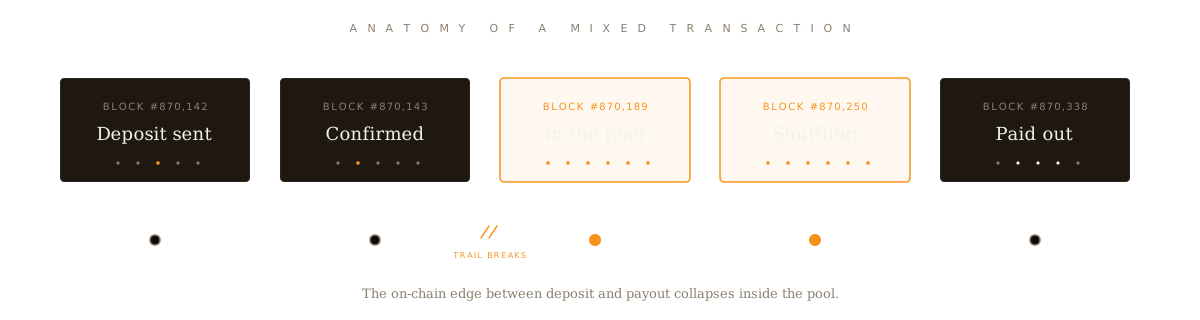
Bitcoin mixer transaction timeline — deposit, pool, mixing, and payout blocks
// PROCESS 01 / 03

Send.

You send your BTC to an address the tumbler controls. Behind it sits a pool with funds from many other users. The bigger and busier that pool is, the better the privacy it can offer you.

Shuffle.

Inside the pool, your coins blend with everyone else's. The blender waits — the longer the better — then picks unrelated wallets to pay out from. The wait is where most of the privacy actually comes from.

Receive.

The same amount lands in a wallet you control, sent from addresses that have no on-chain connection to the one you sent in. The trail goes cold somewhere in the middle. That's the whole trick.
INPUT ADDRESS tx → mixer
MIXING
OUTPUT ADDRESS mixer → you

Privacy on a public chain.

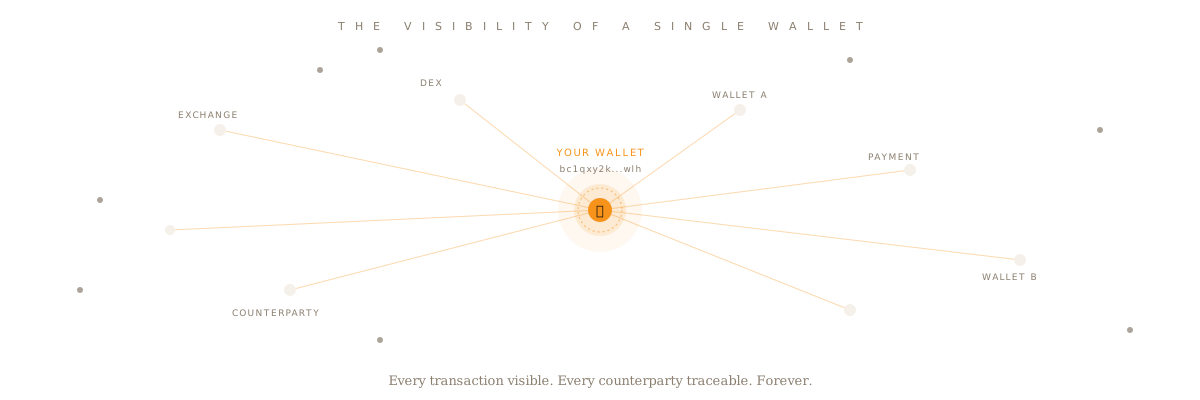
Network graph showing one Bitcoin wallet's visible counterparties across the public chain

Here's the thing about Bitcoin. Every transaction is public. Forever. Anyone with a browser can pull up an address and see the whole history — when it received coins, who sent them, where they went next. That's the design. It's also the part most people only think about once it's too late to undo.

A bitcoin mixer is a tool that softens that. You send coins in, they shuffle with everyone else's, you get the same amount back from completely different wallets. The on-chain edge between you and whatever you do next gets blurry. BTC mixers don't make Bitcoin private the way Monero is private — nothing does that to Bitcoin — but they buy back a chunk of the privacy the protocol gives away by default.

The case for using one isn't dramatic. Most people who run their coins through a tumbler aren't doing anything especially interesting — they just don't want their salary, their savings, or their politics sitting on a public website forever. Privacy isn't suspicious. It's just the part of life everyone else gets to keep without thinking about it.

"
Bitcoin is public by design. Bitcoin mixers exist to soften that.

The upsides are real but limited. A good BTC mixer breaks the obvious links chain-analysis firms use to profile retail users. It works with delays and output splits that let you trade speed for stronger privacy. It runs across many wallets at once, so your transaction blends into thousands of others rather than standing out alone. None of that requires new skills — send funds, wait, receive funds.

The downsides are also real, and the best bitcoin mixers don't hide them. You pay a fee, usually somewhere between half a percent and five percent. You wait — sometimes a few minutes, sometimes a day or two — and faster almost always means worse privacy. With centralized services you're trusting an operator not to disappear during the window they hold your funds. Some exchanges flag coins that have passed through known pools, and the rules around all of this vary wildly depending on where you live.

Picking one is mostly common sense. Look at how long a service has been running. A bitcoin mixer that's worked steadily for years through multiple market cycles has proven something a brand-new one can't. Look at pool depth, because anonymity is arithmetic — a pool of forty doesn't buy what a pool of four thousand does. Read the logging policy carefully; "no logs" is two words, and useful policies are paragraphs. Check for configurable delays and the option to split your output across several wallets. And look for a reputation that exists outside the service's own homepage — old forum threads, mentions in coverage they didn't write themselves. That part is hard to fake.

In 2025, an estimated $11.4B moved through the top bitcoin mixers — a category most people still pretend doesn't exist.

Using a bitcoin mixer.

The choreography is roughly the same across every service. The details vary, the order doesn't.

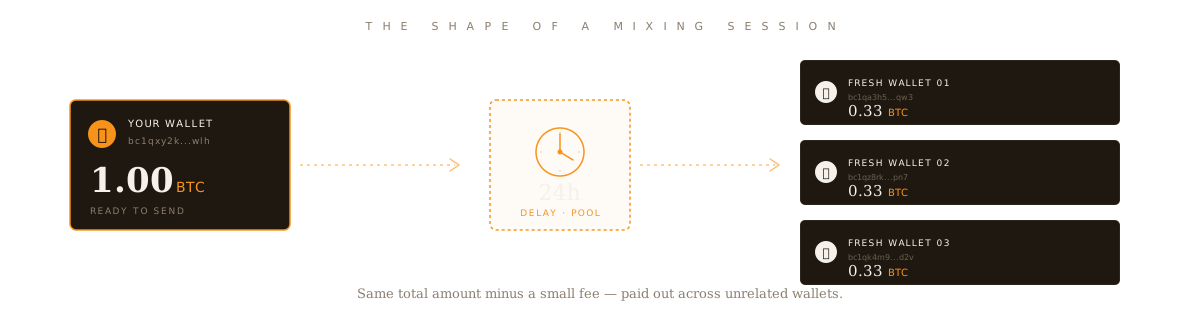
Bitcoin mixer session — source wallet, mixing pool with delay, three fresh output wallets
  1. 01
    Pick the amount. Reputable bitcoin tumblers show their fee and the minimum transaction size before you commit. If a service doesn't, that's already a flag.
  2. 02
    Use a fresh output wallet. The whole point is to break the link with the wallet that sends funds in. Where the service supports it, split the return across several addresses with different delays.
  3. 03
    Pick a long delay. This is the dial. Ten minutes is fast but weak. A 24- or 48-hour window blends your transaction into far more activity.
  4. 04
    Send and save the code. You'll get a deposit address and a recovery code. Save that code somewhere safe before you send anything — without it, fixing problems later is much harder.
  5. 05
    Wait. The boring part. The longer you wait, the more transactions overlap with yours. Don't refresh your wallet every five minutes.
  6. 06
    Receive. Funds arrive in your output wallet from addresses that have no on-chain link to the one you sent in. That's the end of it.

Common questions.

What is a bitcoin mixer?

A bitcoin mixer is a service that takes your BTC, pools it with funds from many other users, and sends back the same amount from different wallets. The link between your original wallet and the new coins becomes much harder to follow on the blockchain.

Are bitcoin mixers legal?

It depends on where you live. Some places treat them as ordinary privacy tools. Others have sanctioned specific services. Mixed coins can also trigger reviews on regulated exchanges. Check your local rules — a Reddit thread isn't legal advice.

How long does mixing take?

Anywhere from a few minutes to a couple of days. Faster usually means weaker privacy because fewer transactions overlap with yours. Most experienced users pick the longest delay they can live with.

How much do BTC mixers cost?

Most charge between 0.5% and 5% of the amount, plus the standard Bitcoin network fee. Anything dramatically below that range is either subsidized or hiding something. Anything dramatically above it should be treated with suspicion.

What separates the best bitcoin blenders from the rest?

Reputation, pool depth, transparent fees, configurable delays, and a logging policy you can actually read. The top bitcoin mixers in 2026 expose the privacy levers — delay window, output partitioning — rather than hiding them behind a single fixed flow.

Nothing here is legal advice. Privacy is a fair thing to want. So is following the rules where you happen to live. Both can be true at the same time. If you use a bitcoin mixer, do it with your eyes open — read your local rules, and don't trust any service with more than you can afford to lose.

— bitmixers.net